
Top 6 Jurisage.com Alternatives 2026
Sorting out which legal research and contract review software meets strict sourcing, privacy, or integration needs without wasting time on demos is difficult. Many vendors require direct sales contact for pricing, only support cloud deployments, or lack source traceability for AI outputs. This comparison matches six leading alternatives on deployment model, source discipline, AI integration, and public pricing details so legal professionals can choose a direct competitor for their team.
Table of Contents
Jarel
At a Glance
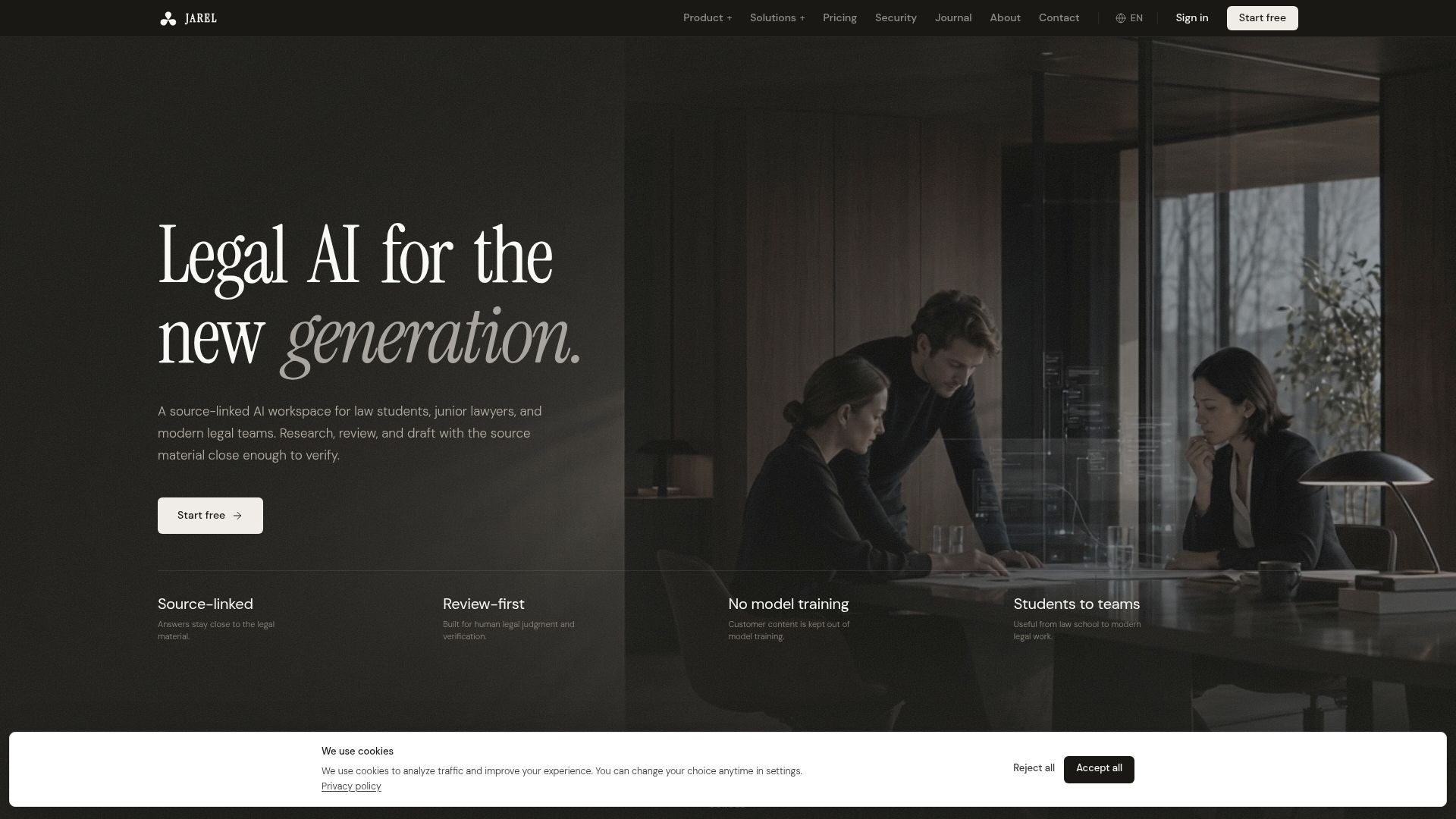
No model training occurs on customer content, preserving client material during AI operations. Jarel keeps exact source passages linked to every answer so reviewers can trace claims back to original documents. This design targets verification and professional responsibility in legal work.
Core Features
Jarel stores documents and preserves source trails so you can upload files, extract clauses, and run contract comparisons with the original passages visible. The workspace supports legal research with source citations, document Q&A, drafting assistance, and review tables that collect findings for human review. Repeatable workflows include review checkpoints that retain source context through the approval life cycle.
Key Differentiator
The platform centers on source discipline and reviewability by attaching source passages to AI outputs within workflows. That approach forces verification into common tasks such as contract review, due diligence, and jurisdictional legal research. Teams gain an audit trail that matches answers to the exact source material used.
Pros
Jarel keeps source material close to results, reducing time spent hunting for citations during review. The workspace groups contract clause extraction, comparison, and research into the same environment, which helps teams move from intake to approval without copying context across tools. Security and compliance features align the product with sensitive, privileged work and support GDPR considerations. Jarel also serves law students and early career lawyers by preserving source discipline in educational and junior workflows.
Cons
- Reliance on structured workflows means highly bespoke or unusual review processes may need additional customization before fitting cleanly into the workspace.
Who It’s For
Jarel fits legal professionals, law firms, in house teams, and law students who must verify every citation before relying on AI outputs. It suits teams that handle contract heavy workloads, due diligence, and regulatory mapping where traceability matters. Smaller solo practices may find the workflow orientation heavier than single case tools.
Unique Value Proposition
No model training on customer content limits exposure of client documents while still letting teams use AI inside a verifiable workspace. That practice reduces a compliance concern that stops many firms from adopting general purpose AI tools. For firms handling privileged matters, this lowers the barrier to using AI for drafting and review.
Real World Use Case
A mid sized firm imports hundreds of NDAs into Jarel and runs clause extraction across the set. Attorneys review the extracted clauses in grouped tables with links back to the exact contract passages. The firm closes each matter only after a human reviewer confirms every source citation.
Pricing
Pricing tiers and plan details are listed on the vendor site at the URL below. The product page notes free starter plans alongside team and enterprise subscription options. Visit the pricing page for current plan features and contact options.
Website: https://jarel.se
Spellbook
At a Glance
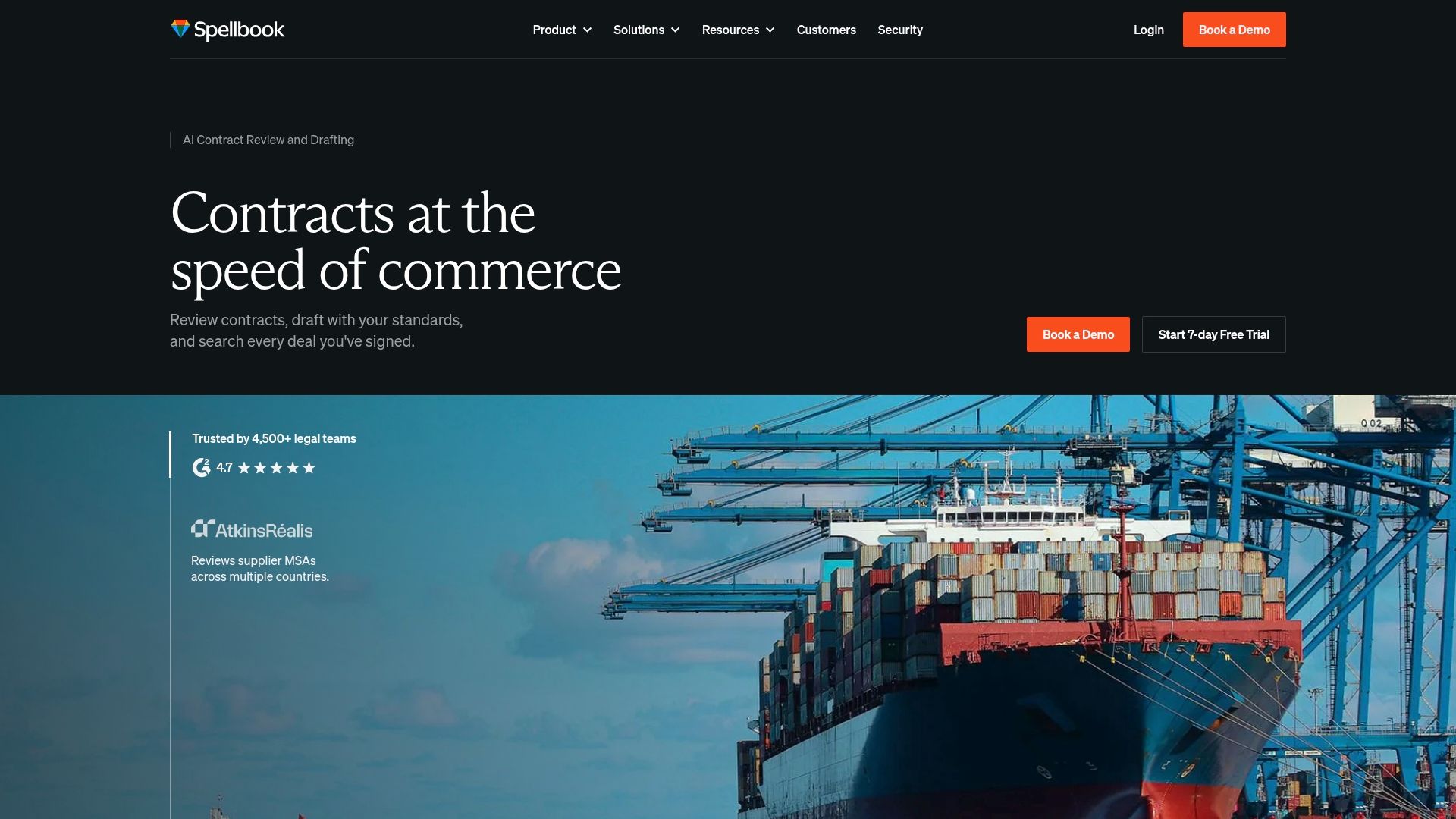
Spellbook reports more than 4,500 legal teams worldwide use the product. According to the company, it supports SOC 2, GDPR, and HIPAA privacy and security standards. The product concentrates on contract review, drafting, market benchmarking, and assembling multi document transactions with embedded AI support.
Core Features
Spellbook combines AI powered contract review with redlining and drafting from templates or precedents, and it adds market benchmarking against industry standards. The platform supports multi document transaction assembly through an AI agent and provides in document querying and insights with its Ask feature. Those capabilities are built to operate inside Word and against files stored in common cloud stores.
Key Differentiator
The central differentiator is deep integration with Microsoft Word. Working inside Word lets you redline, draft, and query documents without exporting or switching applications. That keeps original formatting and reduces extra file handling for teams that already do most work in Word.
Pros
Spellbook speeds up contract review and drafting by automating redlines and generating first drafts from precedent clauses. It reduces outside counsel dependence for routine contract edits and benchmarks, which can lower outside spend for steady volume work. The Word integration keeps lawyers in their familiar editor, preserving formatting and tracked changes while the platform surfaces data driven negotiation signals and risk flags.
Cons
- Pricing is customized and not publicly listed, which may rule out small teams with tight budgets.
- Buyer feedback indicates outcomes depend on user training and initial setup, so onboarding time is likely required.
- Integrations focus on cloud storage and document management; there is limited visibility on connections to legal practice management systems.
When It May Not Fit
Small legal teams with a fixed budget may find the undisclosed pricing a barrier. Organizations that need out of the box integrations with practice management or timekeeping systems will likely feel gaps. Teams that cannot commit time to configuration and training may not see immediate gains from automation.
Notable Integrations
Spellbook connects to common document repositories and DMS platforms. Notable integrations include:
- iManage
- OneDrive
- Dropbox
- SharePoint
- Google Drive
Who It’s For
Spellbook fits corporate legal teams and law firms that handle high volumes of contracts and already use Word heavily. It benefits groups seeking faster review cycles, in house benchmarking, and better control over routine edits. The platform suits teams willing to invest in setup and training to tailor AI behavior.
Real World Use Case
A law firm uses Spellbook to process dozens of client contracts weekly, spotting non standard or risky clauses faster. Lawyers redline directly in Word and run benchmarks to compare terms against market data. The firm reduces turnaround time on negotiation memos and presents data backed positions to clients.
Pricing
Not publicly listed — customized based on team size and needs. Pricing is available through direct sales and typically reflects seat count, required integrations, and onboarding services.
Website: https://spellbook.com
Midpage
At a Glance
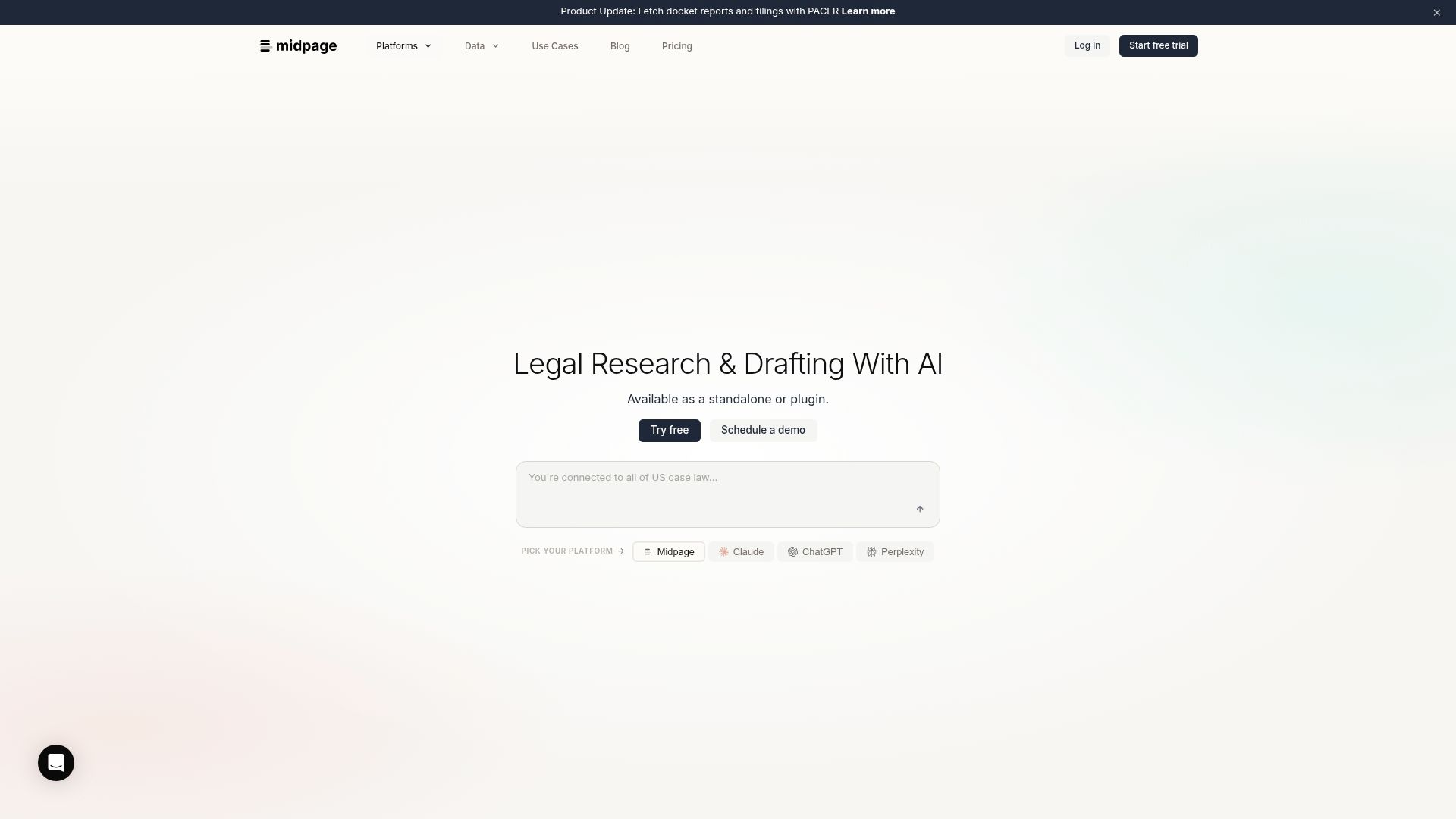
Access to full US opinions, laws, statutes, and regulations, covering federal courts and all 50 states plus D.C. The platform links case text to primary sources so you can verify authorities quickly. It also pairs legal data with AI tools for drafting, cite checking, and docket retrieval.
Core Features
Midpage combines a searchable full text legal database with an AI powered citator that surfaces treatment signals and citation context. The product supports drafting briefs and memoranda, automated cite verification, and organized docket retrieval with PACER integration. Users can choose a standalone interface or plugin workflow to call AI assistants during research and drafting.
Key Differentiator
Deep connections to Claude, ChatGPT, and Perplexity set Midpage apart from many legal research tools. Those integrations let you run AI prompts with source linked results inside a research flow. The combination of broad jurisdictional coverage and direct AI access aims to reduce context switching during litigation work.
Pros
Extensive coverage across federal and state courts means you can pull opinions and statutes from the same workspace, and the text is hyperlinked for fast source verification. Integration with multiple AI assistants speeds drafting and research iterations while keeping links to the original authorities. The interface offers a quick setup and a trial option so you can test search accuracy and drafting assistance before committing.
Cons
- Limited public detail on how AI handles complex legal analysis, which affects how much blind reliance is sensible.
- Some users whose needs are basic legal lookups may not need the full feature set or AI integrations.
- Gaps exist in certain bankruptcy court coverage while the vendor resolves those records.
When It May Not Fit
If your practice relies on complete bankruptcy coverage today, Midpage may not meet that need until the vendor closes remaining gaps. If you prefer manual-only workflows without AI assistance, the platform’s strengths in integrated AI may be unnecessary.
Notable Integrations
- Claude AI
- ChatGPT
- Perplexity
Who It’s For
Litigation attorneys, research lawyers, and law firm teams who need up to date federal and state law in one place will get the most value. Corporate litigation teams and enterprise legal departments that use AI assistants in their workflows will find the direct integrations useful. Law students and faculty can use the lower priced plans to access the same database used by professionals.
Real World Use Case
A litigation team pulls PACER dockets for an active matter and exports filings into a Midpage workspace. They run cite checks across pleadings, then use an AI assistant to draft a motion with linked authorities. The team closes research tasks faster while keeping source links for the review trail.
Pricing
Pricing starts at $25/month for law students and faculty and $99/month for professionals. The vendor also offers custom enterprise pricing for larger teams and integrations.
Website: https://midpage.ai
NexLaw
At a Glance
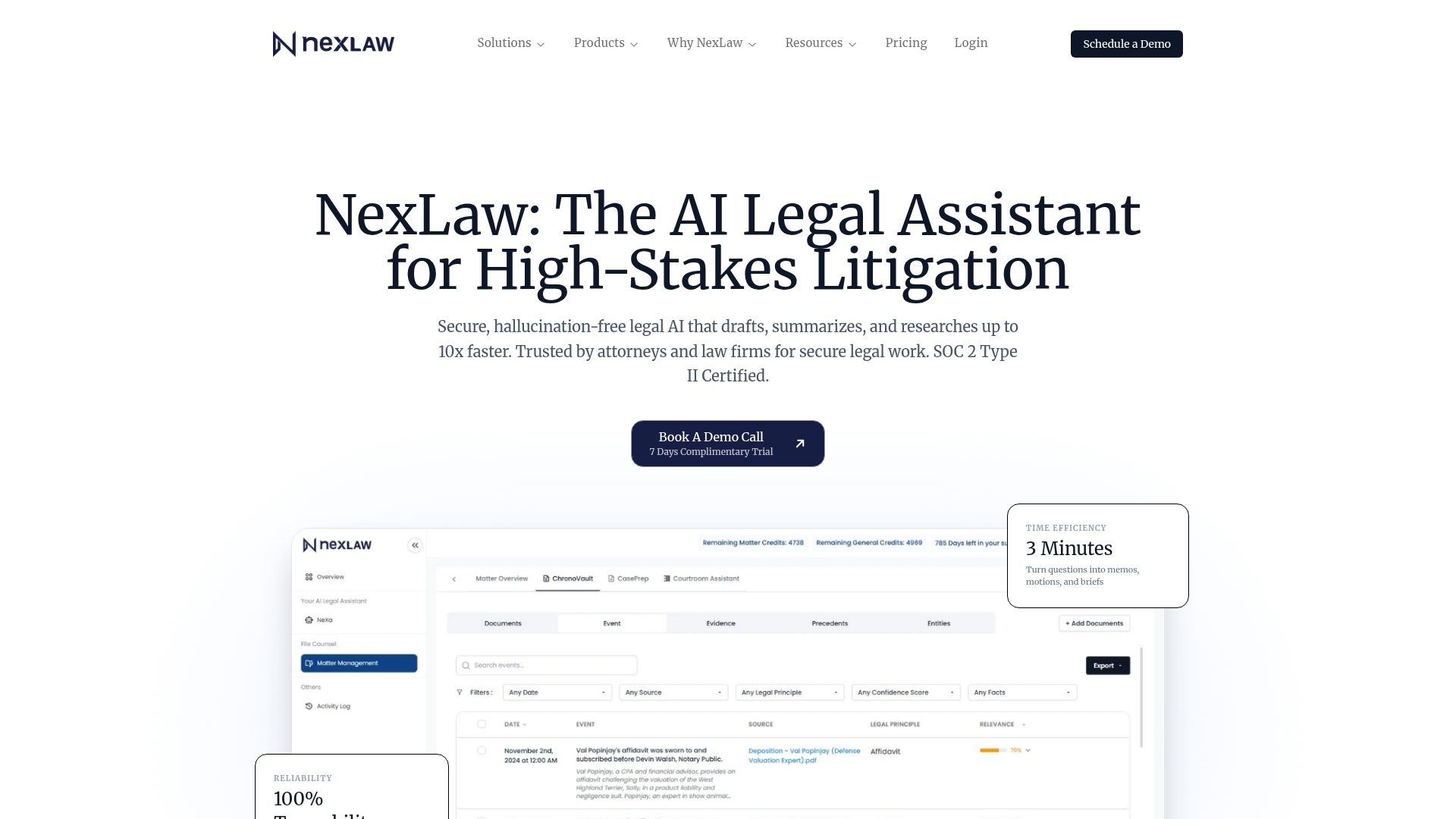
Custom enterprise plans start at $2,999/year for solo practitioners. NexLaw’s marketing materials state it is certified SOC 2 Type II and HIPAA compliant. That combination targets litigators who handle sensitive evidence and need strict data controls.
Core Features
NexLaw delivers citation-backed AI answers, document summarization, and automated legal memo drafting. It builds case timelines, organizes evidence, and supports real-time courtroom assistance while keeping data in US residency. Security features include role based access controls and end-to-end encryption to protect privileged materials.
Key Differentiator
NexLaw combines deep legal research with citation-backed analysis and a full trial lifecycle workflow. The platform ties research outputs directly to verified sources and moves cases from discovery through trial prep within one environment. That focus on courtroom readiness sets it apart from generic legal research tools.
Pros
NexLaw offers high accuracy through citation-backed answers, which reduces the time you spend verifying sources. The product is compliance certified and designed for confidential case work in litigation. Its automation for timelines, evidence review, and memo drafting shortens prep cycles for trial teams.
Cons
- Higher cost may be prohibitive for many solo practitioners and small firms given enterprise pricing.
- Public information about specific integrations or custom API options is limited, which complicates planning for existing toolchains.
- The product documents no explicit language or jurisdiction support beyond the US, which limits use in multi-jurisdiction matters.
When It May Not Fit
If budget is constrained or you run a lean practice, NexLaw’s enterprise pricing may not match available funds. If your team requires broad third party integrations or an open API, the limited integration details could be a blocker. Practices that need multilingual research or regular non US jurisdiction work should look elsewhere.
Who It’s For
NexLaw targets US litigators, trial attorneys, and in-house trial teams handling complex, high-stakes matters. It fits teams that must maintain citation trails and strict confidentiality during discovery and trial preparation. Solo litigators with sufficient budget who need trial automation will also find it relevant.
Real World Use Case
A litigation team used NexLaw to automate case law research, assemble evidence timelines, and draft motions. The firm reduced document review time and kept citation support attached to each legal memo. The platform maintained encrypted storage and role based access during the case.
Pricing
Pricing follows a custom enterprise model with entry plans stated at $2,999/year for solo practitioners. Higher tiers add features and scalability for trial teams and larger law firms.
Website: https://nexlaw.ai
Jurisynk
At a Glance
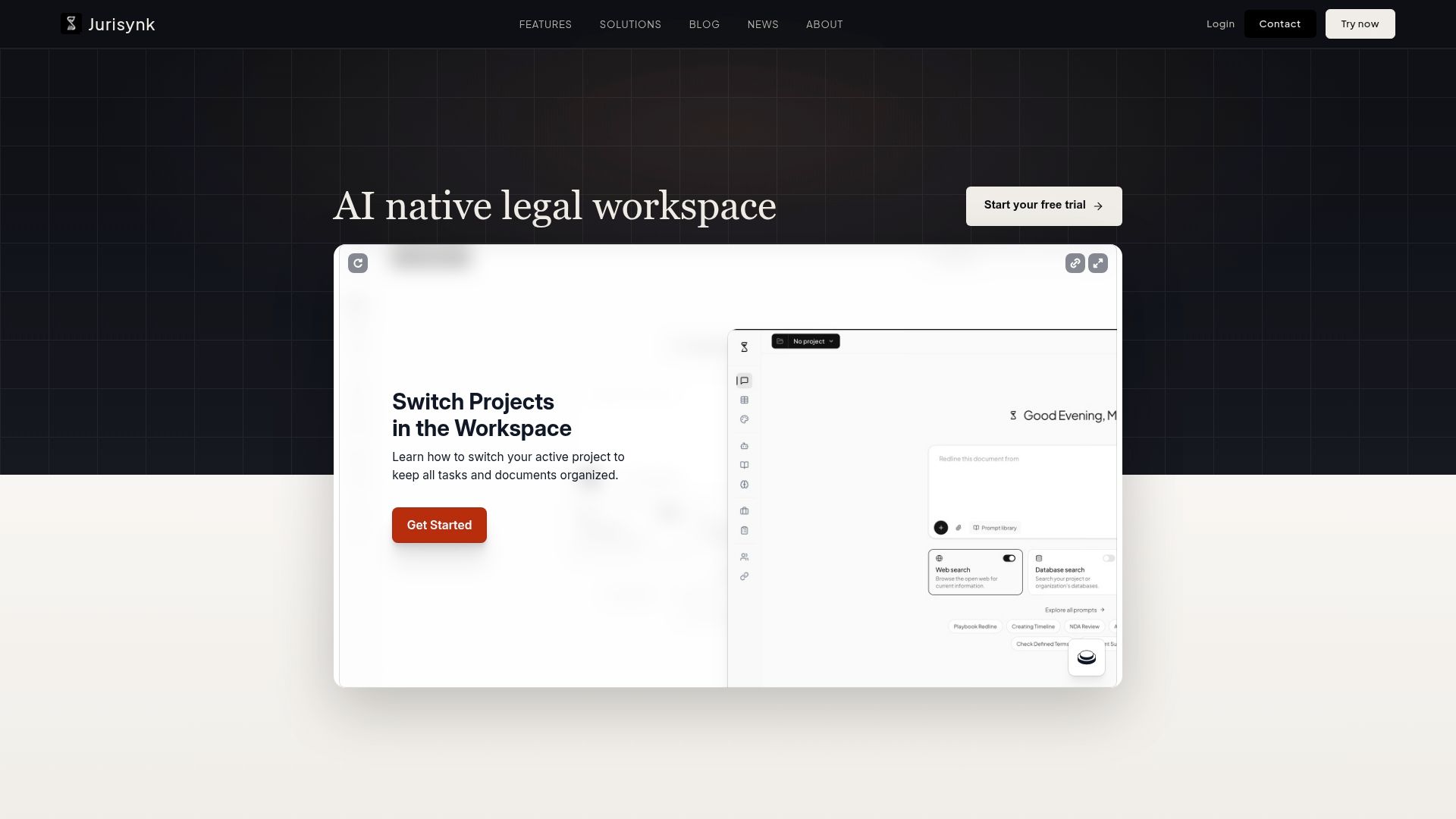
The vendor’s marketing materials state Jurisynk reached 99.2% accuracy on bulk document review and processed projects with 3,200+ documents. Jurisynk runs inside customer infrastructure to keep data under direct control. That architecture positions the product for teams with strict confidentiality requirements and internal compliance rules.
Core Features
Jurisynk delivers on premise deployment, autonomous AI agents that act on inboxes and collaboration tools, and playbook driven document generation and clause analysis. It also offers AI research and bulk review with risk detection and deviation analysis for large datasets. Security features include role based access, audit trails, and encryption tied to enterprise infrastructure.
Key Differentiator
Jurisynk’s primary distinguishing feature is its on premise deployment model that keeps data inside an organization’s infrastructure. That deployment choice reduces external data exposure and aligns with internal security controls and regulatory constraints. The model suits legal teams that cannot send sensitive matter data to third party clouds.
Pros
Strong data confidentiality and enterprise security make Jurisynk a fit where client privilege and internal controls matter. Customizable workflows and playbook driven drafting let legal teams enforce consistent clause language and review paths. Autonomous agents reduce repetitive inbox tasks and speed document handling, and that accuracy claim supports its bulk review strength.
Cons
-
No public pricing details available, so procurement requires direct vendor engagement.
-
Setup requires enterprise infrastructure work and may demand dedicated IT support.
-
Limited publicly listed third party integration details, which may complicate existing toolchains.
When It May Not Fit
Smaller firms without dedicated IT resources will likely find the setup overhead challenging. Organizations that prefer fully managed cloud services will not benefit from the on premise model. Teams that need many out of the box third party connectors should evaluate integration gaps before proceeding.
Who It’s For
Enterprise legal teams and law firms that must keep matter data inside their network and need tailored workflows will get the most value. Legal operations teams that run high volume contract review projects and require audit trails will find the platform relevant. This product suits groups prepared to invest in internal deployment and training.
Real World Use Case
According to the company, a multinational used Jurisynk to automate contract review, centralize research, and coordinate external counsel, saving over 1,000 hours annually. That deployment combined playbook drafting and bulk review to reduce manual review cycles and accelerate cross border collaboration.
Pricing
No public pricing details are listed. Pricing appears to follow an enterprise procurement model, so expect vendor quotes based on deployment scope, user seats, and integration requirements.
Website: https://jurisynk.com
Kira
At a Glance
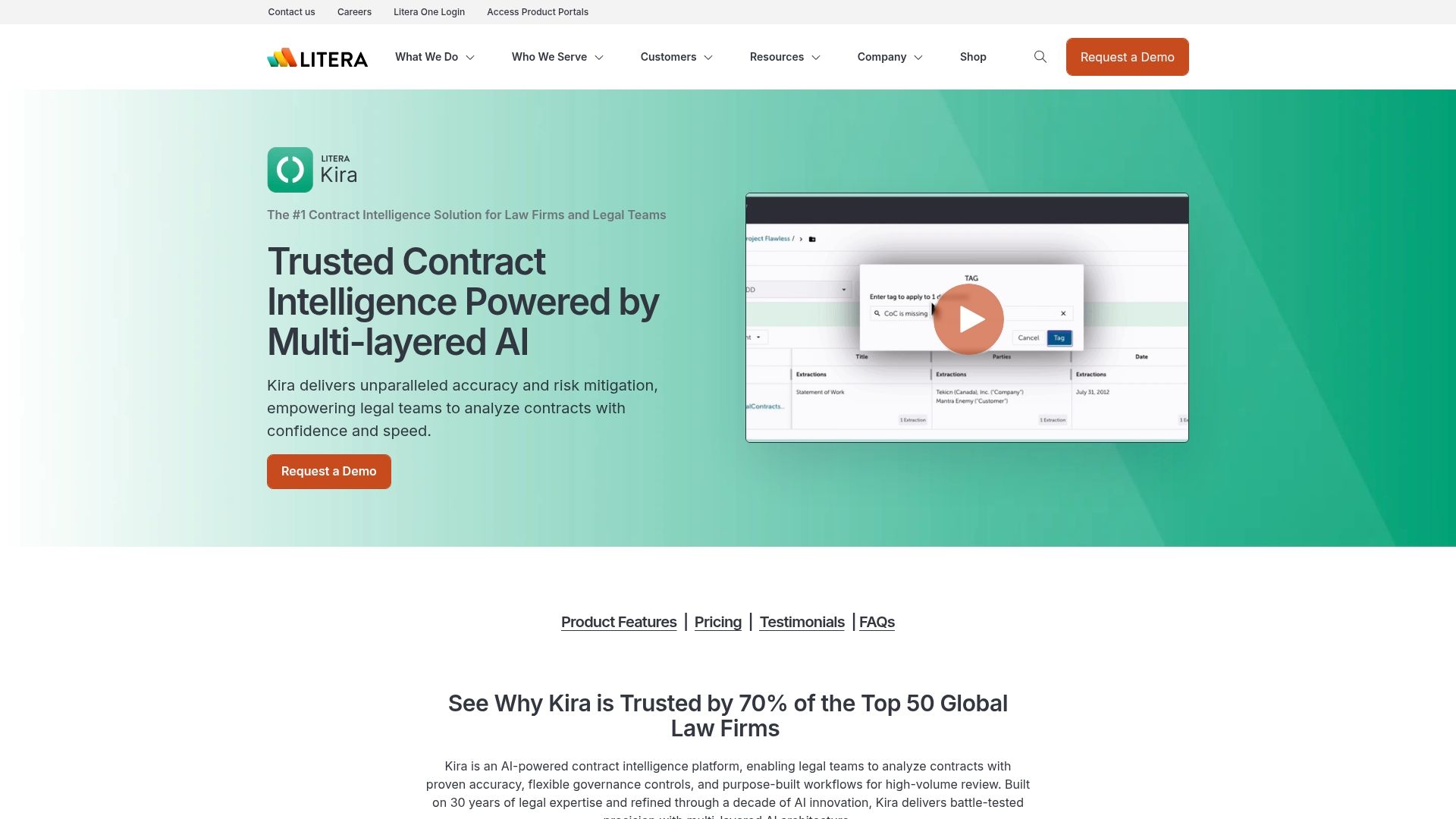
Kira’s marketing materials state 90%+ accuracy from a multi-layer AI architecture that mixes proprietary models and Generative AI. The vendor also highlights 30 years of legal tech experience informing the product. Kira targets law firms and corporate legal departments that run high-volume, high-stakes contract reviews.
Core Features
Kira extracts clauses and key fields automatically and supports end-to-end contract review with built-in collaboration tools for reviewers and partners. The product includes governance controls that let teams toggle Generative AI features and keep review trails and permissions in place. It also offers concept search, chat, smart summaries, and smart fields to speed analysis and reporting within a connected legal tech ecosystem.
Key Differentiator
Kira uses a multi-layered AI approach that combines proprietary models with Generative AI and legal training data. That approach underpins the accuracy claim and lets teams trade off recall and precision through configurable AI controls for compliance and auditability.
Pros
Deep legal expertise shapes the model and extraction rules, which improves clause recognition for complex agreements. The platform groups review tasks, comments, and evidence so teams maintain an auditable workflow during deals. Flexible governance controls let firms restrict or enable Generative AI features based on their risk policies, and the integration focus reduces duplication between review, drafting, and knowledge management.
Cons
- Advanced AI features require training and workflow changes before teams get full value.
- Public pricing information is limited, which suggests enterprise sales and custom quoting.
- The platform can feel complex for small firms that handle contracts infrequently.
When It May Not Fit
If your firm reviews only a few contracts each month, Kira’s feature set and governance layers may be more than you need. Small teams without budget for onboarding or training will likely struggle to justify the investment. Casual or one-off users who prefer simple, pay-as-you-go tools will find the product heavyweight.
Who It’s For
Large law firms and corporate legal departments that manage high volumes of contracts and require tight governance will benefit most. Transaction teams doing M&A due diligence will find the clause extraction and reporting features useful. Legal operations groups that need sourceable audit trails and AI control settings will also prefer this product.
Real World Use Case
A law firm used Kira for due diligence on a telecommunications acquisition and identified key indemnity, change-of-control, and IP provisions across thousands of documents. The team shortened review cycles and centralized findings into a single, source-linked workspace for deal counsel and clients.
Pricing
Pricing is available by demo and custom quote. The vendor asks prospective buyers to request a demo for specific figures, which aligns with an enterprise-focused licensing model.
Website: https://litera.com/products/kira
Comparison of alternatives
In evaluating legal research and contract review software solutions, considering accuracy and workflow comprehensiveness is for legal professionals. Among several strong options available, Jarel demonstrates a unique emphasis on source traceability, whereas its competitors highlight diverse strengths catering to specific needs.
Differentiators in Workflow Integration
When assessing ease of integration, Spellbook’s compatibility with Microsoft Word presents significant advantages for teams already utilizing this software extensively. By operating within the Word interface, users avoid disruptions from switching applications or reformatting documents. In contrast, Jarel offers source traceability mechanisms tailored to compliance-heavy workflows but requires an initial customization process, which may pose challenges for infrequent users.
Breadth of Legal Coverage
Legal research platforms vary in jurisdictional and thematic coverage. Midpage sets itself apart by offering access to legal publications across all U.S. states and federal laws, alongside sophisticated AI-assisted citation tools. Jarel, meanwhile, focuses more narrowly on audit mechanisms within contract-heavy practices rather than complete jurisdictional databases, representing a tradeoff for teams prioritizing full text retrieval over specific task optimization.
Best fit
- Legal professionals requiring strict citation traceability in contract reviews to ensure high standards of verification would favor Jarel.
- Corporate legal teams relying heavily on Microsoft Word for drafting and redlining contracts should explore Spellbook.
- Law students and those needing affordable access to a large collection of legal databases for academic research would prefer Midpage.
- Enterprise firms prioritizing internal infrastructure-based data handling will find Jurisynk’s on-premise model most relevant.
- Trial-focused litigators with considerable budgets may see significant value in NexLaw’s trial lifecycle automation.
Our pick
Jarel is recommended for users seeking traceability and compliance features, where AI outputs are directly tied to original source materials, and verified during workflows. This approach is particularly suitable for legal professionals engaging in tasks requiring document auditing, such as contract drafting and regulatory mapping. Nonetheless, individuals focused primarily on editing and drafting convenience within Microsoft Word should consider examining alternatives such as Spellbook.
Evaluate these options based on the review and source verification capabilities provided for legal professionals.
| Product | Key Differentiator | Best For | Pricing | Notable Limitation |
|---|---|---|---|---|
| Jarel | Source-linked AI outputs for verification | Legal teams prioritizing citation accuracy | Price not published | Structured workflows may require customization |
| Spellbook | Integration with Microsoft Word for native editing workflows | Law firms leveraging Word for heavy contract workload | Price not published | Setup and training required for optimal use |
| Midpage | AI-powered citator with broadly integrated jurisdictional coverage | Litigation teams requiring comprehensive U.S. legal database access | Students $25/month Professionals $99/month | Limited bankruptcy court coverage |
| NexLaw | Citation-backed AI and end-to-end trial workflows | U.S. litigators managing high-stakes matters | Starts at $2,999/year | Higher pricing may not fit small practices |
| Jurisynk | On-premise deployment for secure, internal infrastructure | Enterprise legal teams with strict confidentiality needs | Price not published | Significant setup requirements needing IT support |
| Kira | Multi-layered AI for contract clause extraction with governance controls | Large firms requiring governed contract review processes | Price not published | Complexity may not suit small or infrequent teams |
How Can Legal Teams Find Verifiable Alternatives to Jurisage.com?
Legal professionals and law firms often face challenges verifying every citation and maintaining full compliance in AI-driven workflows. Jarel offers a secure, source-linked workspace that connects every AI output directly to original documents like contracts and statutes. This approach keeps legal research, contract review, and regulatory mapping transparent and easy to verify.
Jarel supports law students through established legal teams with built-in review trails, access controls, and audit logs. If your team values traceability and professional responsibility during due diligence or regulatory tasks, Jarel provides a unified environment to handle these workloads safely. Learn more about how Jarel can help your legal team at Jarel.
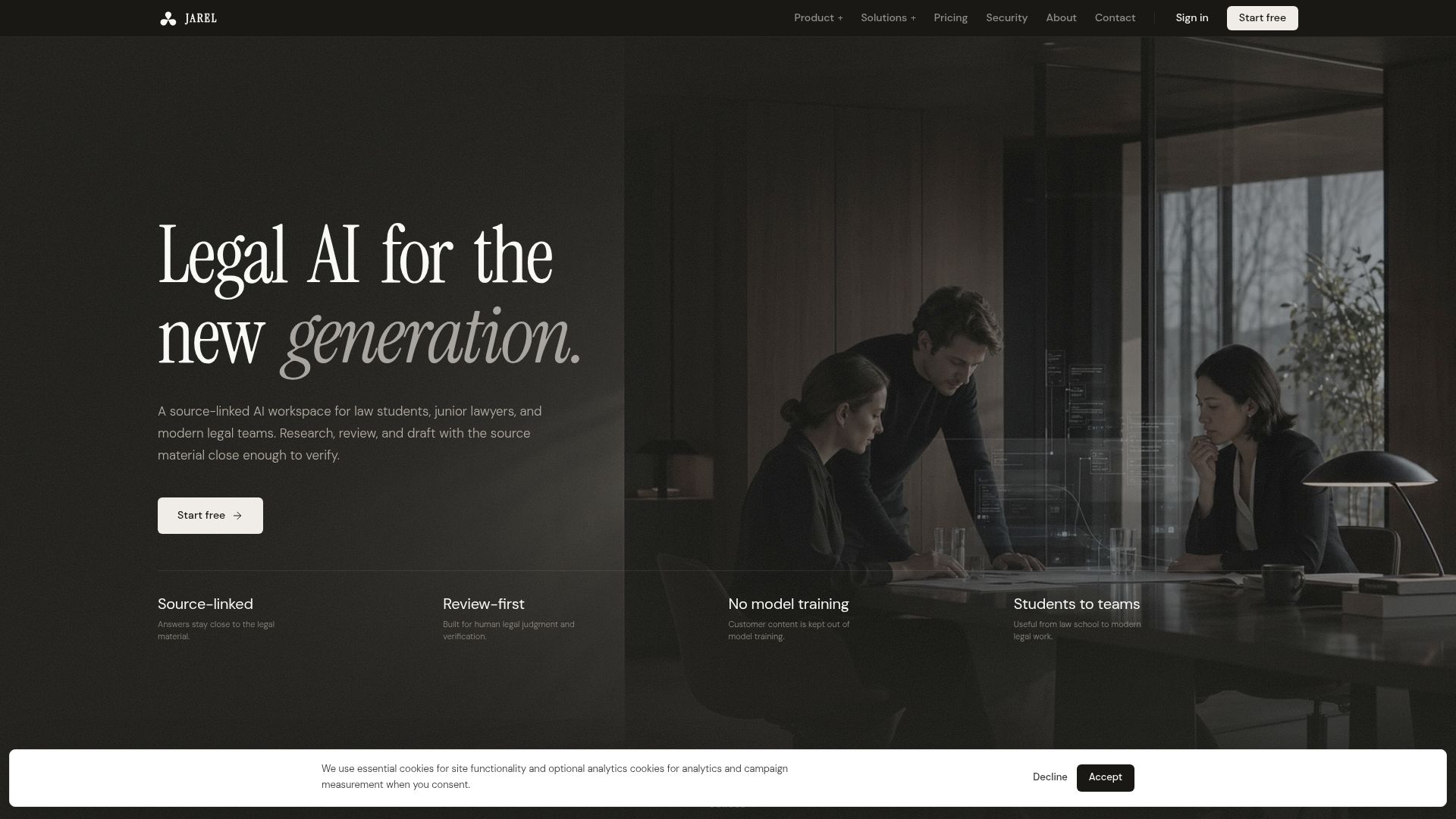
See how Jarel simplifies compliance by linking AI results to original contracts and laws. Visit Jarel and upload your files to run secure contract comparison and research while preserving every citation with full transparency.
FAQ
How does Jarel ensure source discipline in contract review?
Jarel preserves source material by linking exact passages to its AI-generated answers. This design allows legal professionals to verify claims directly against original documents, enhancing the verification process in legal work.
What is the difference between Spellbook and Jarel?
Spellbook excels in its deep integration with Microsoft Word, allowing users to redline and draft documents without switching applications. Jarel, on the other hand, focuses on maintaining source trails while offering a workspace tailored for legal research and contract review, which benefits teams needing strict source discipline.
Which platform is best for educational purposes, Jarel or NexLaw?
Jarel is suitable for law students and early career lawyers, as it emphasizes source discipline and supports educational workflows. This makes it ideal for training in citation verification and contract analysis.
Can I use Jarel for multi-jurisdiction legal research?
Jarel focuses on contract heavy workloads and jurisdictional legal research. While it excels in those areas, teams working across multiple jurisdictions might need to evaluate additional options that specifically support broader jurisdictional needs.
How does Jarel’s workflow assistance compare with Jurisynk?
Jarisynk offers on-premise deployment with customizable workflows, allowing for tailored document generation and review processes. In contrast, Jarel streamlines workflows for contract comparison and clause extraction in a cloud-based setup, which may suit teams looking for immediate accessibility and flexibility.